Sacred Blossom Farm
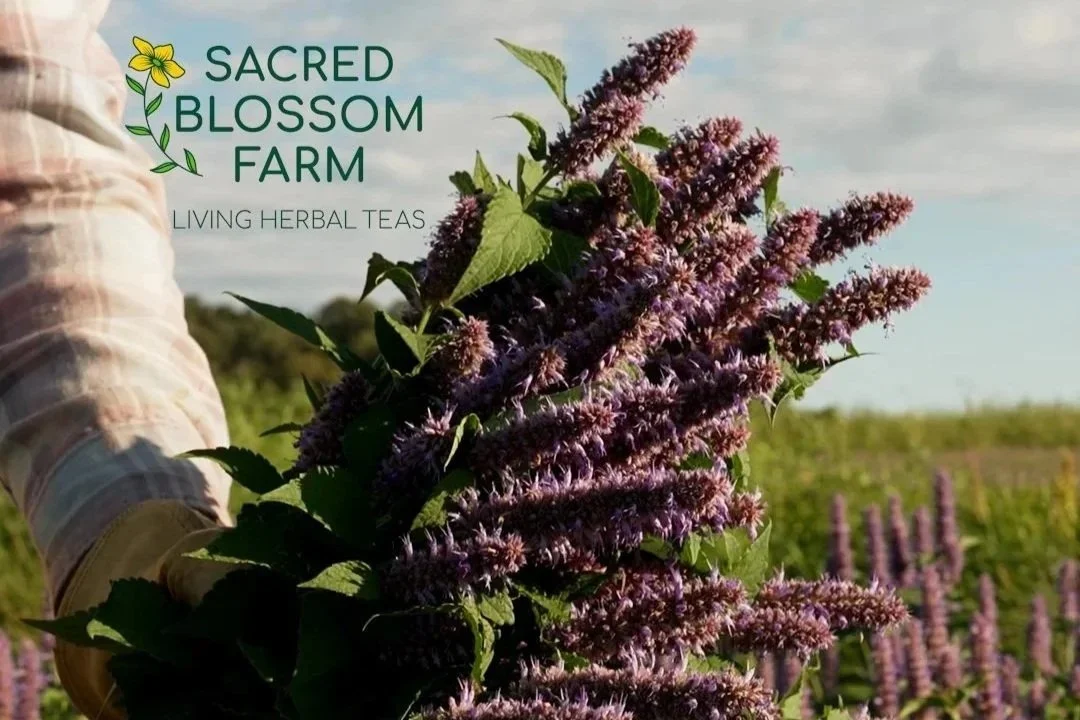
Anise Hyssop
Cultivating Herbal Goodness
Sacred Blossom Farm Herbal Teas Support Wellness All Year Long
By Greg Lovell
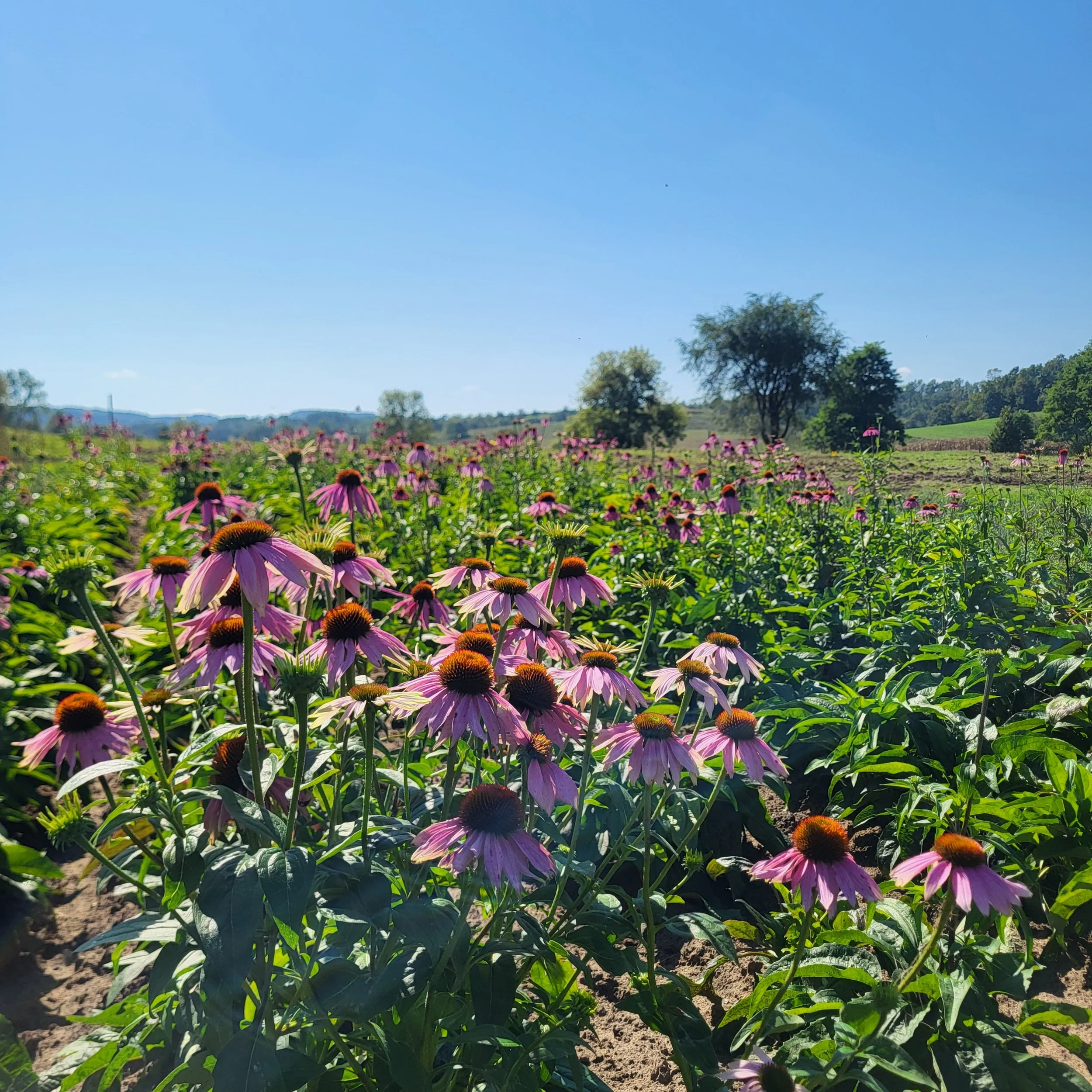
Tony DiMaggio never imagined a career walking sprawling gardens of fragrant herbs on a farm near Mondovi, Wisconsin. In fact, it was a complete accident.
What started as a summer farm job blossomed into a passion for agriculture, health, and sustainability.
“I fell in love with the work. The rhythm of the seasons, being outside every day, and growing things in a way that felt responsible and meaningful,” DiMaggio recalled. “I knew I wanted to build a life around sustainable agriculture.”
DiMaggio says the farmer he worked for taught him a great deal, ultimately becoming a mentor. This experience, coupled with a background in business administration, helped DiMaggio start a small, regenerative herb farm producing herbal teas. In 2016, Sacred Blossom Farm officially launched.
A Vision Takes Root
DiMaggio began with the simple goal of creating something better than what currently existed.
“I spent a lot of time walking grocery store aisles, studying shelves, and asking myself what I could genuinely do better,” he recalled. “Herbal tea ended up being the perfect fit.”
DiMaggio says getting the business up and running was a borderline miracle. He was fortunate to find generous landlords who allowed him to live and work on the farm rent-free for two years. Without them, Sacred Blossom Farm would not have been possible.
“I’m still farming on that same land today, and the landlords have become some of my best friends,” DiMaggio continued.
This same spirit of conviviality still permeates Sacred Blossom today.
“Our mission is the same one my mentor passed down to me: to farm for health. Our own health, the health of the land, and the health of consumers.”
To that end, DiMaggio is committed to growing the best herbs he can, with care and intention, and turning them into a quality product people can feel good about purchasing and consuming. The teas are crafted to taste great, are easy to brew, and support wellbeing. In fact, Angel, their best-selling tea, won first place at the Chicago International Tea Festival.
“Our customers tend to be people who care about what they’re putting in their bodies,” said DiMaggio. “We try to make products that feel honest, grounding, and truly supportive, not trendy or over-processed.”
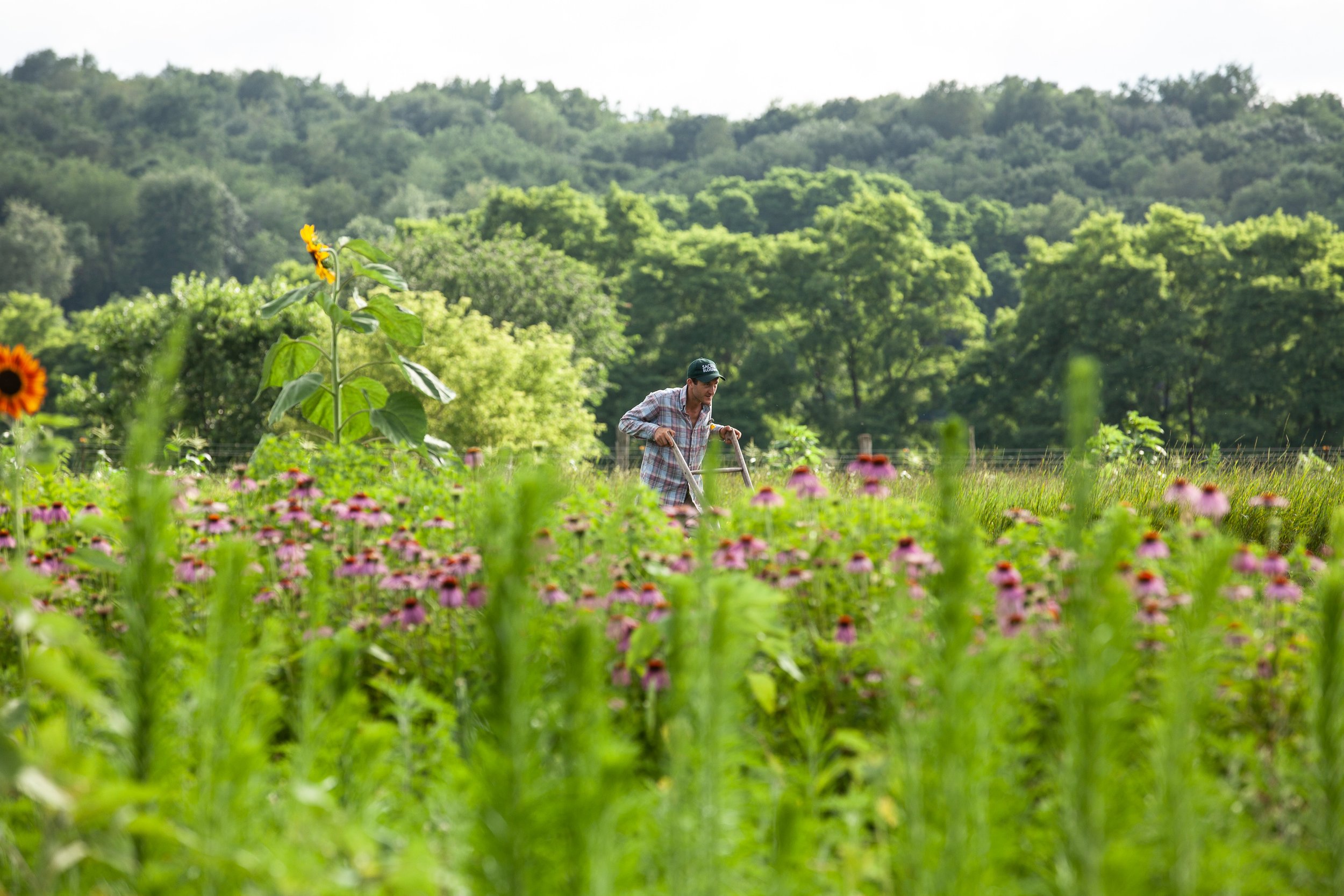
Tony DiMaggio in Echinacea Field
Steeped in Experience
Now with four full-time employees and six part-time employees, Sacred Blossom Farm boasts 20 acres and sells their teas at co-ops across Wisconsin and Minnesota.
“The co-ops really gave us our start. They’ve been such a blessing for farms like mine,” said DiMaggio. “That support made it possible for us to grow slowly and intentionally. We’re incredibly grateful for it.”
Additionally, their website (sacredblossomfarm.com) features information and videos about the farm and how the tea is grown and produced. There is also an online store for customers.
Most of the herbs in Sacred Blossom tea blends are grown on site at the farm, though a small percentage, like raspberry leaf and nettles, are wild harvested because they grow naturally and abundantly in Wisconsin.
“Our wildcrafting, like our farming, is not damaging to our ecosystem.”
DiMaggio says they focus on freshness and integrity, harvesting at peak potency, drying everything gently, and keeping the herbs whole as much as possible.
“That preserves both flavor and the plant’s natural character,” he continued. “A lot of people are surprised by how vibrant and alive the tea tastes. It’s not dusty or dull like what many folks are used to.”
DiMaggio and company use custom built, human-powered machines to de-stem and cut herbs with the highest level of artisan quality.
“Small, local farm production allows us to harvest herbs carefully and at the perfect time, efficiently but with respect for the plants and their end use as the best herbal tea,” DiMaggio said.
Using methods such as polyculture systems, inter-seeding, and small scale weeding has helped Sacred Blossom Farm steward the soil and land to a point of thriving. They also strive for sustainability, minimizing inputs, tractor usage, and shipping.
“What can we say? It’s our passion!” quipped DiMaggio.
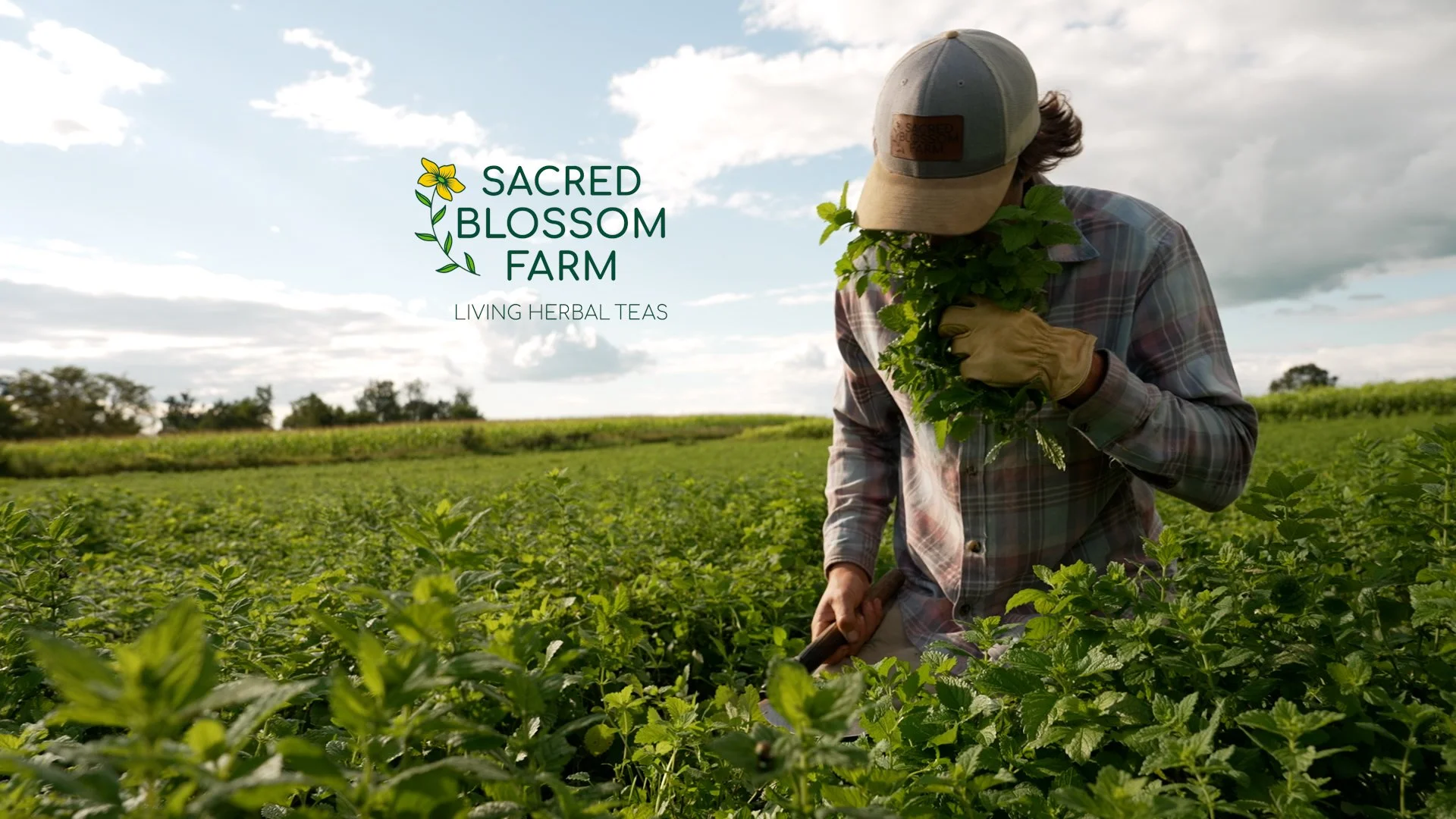
Tony DiMaggio in Lemon Balm Field
Tending to Future Generations
Looking ahead, DiMaggio says he plans to scale up the business while staying true to the values that define it.
“What we do hasn’t changed and won’t change,” said DiMaggio. “I didn’t start farming to get rich but to follow a dream of living and working in harmony with nature.”
DiMaggio says the biggest priority is continuing to produce high-quality products, which starts right in the dirt on the farm.
“Our soil keeps improving. It’s really the foundation of everything we do,” DiMaggio continued. “Healthy soil leads to healthy plants, and ultimately healthy people.”
As Sacred Blossom Farm continues to evolve their growing and processing practices, the goal is steady, thoughtful, sustainable growth, or as DiMaggio puts it, “Doing a little more of what we do best, without losing what makes it special.”
Looking even further down the road, DiMaggio hopes Sacred Blossom Farm can be an example of what’s possible when a farm puts health first and builds slowly and responsibly.
“That sense of responsibility to the next generation, to the soil, and to the people who drink our tea really shapes how I think about what I want to contribute to the future.”
And that is something we can all raise a glass of tea to.
This article is also available to read in our Winter 2026 edition of The Garlic Press!